PPE Recycling for Healthcare Facilities in Canada: Your Questions Answered
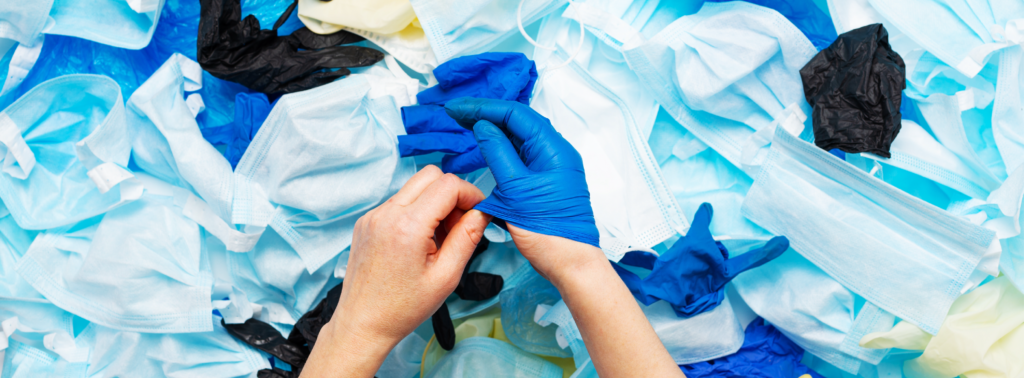
PPE Recycling is becoming more important as hospitals and other healthcare facilities around Canada take steps to lower their carbon footprint and reduce the impact of single-use materials.
PPE use increased significantly during and after COVID and landfill and incineration volumes remain high. It makes sense, PPE is an essential, beneficial part of protecting healthcare staff and patients and its single-use nature is an inherent part of its safety features. That means your healthcare facility has probably looked and considered what safe and compliant options exist for reducing PPE waste.
Across the globe, PPE recycling programs are emerging as a safe and practical option and today Daniels Health is proud to offer innovative PPE recycling for healthcare facilities across Canada. As this is still an emerging service not widely used or available in Canada, we understand you probably have many questions about how this process looks in the real world. When you consider the millions of kilograms of PPE that can be diverted from Canada’s landfills and environment, there’s good reason to investigate this new step in sustainability.
TOPICS WE WILL COVER:
- Is PPE a significant source of waste in healthcare environments?
- Whats accepted for PPE recycling and what’s not?
- How the Daniels PPE Recycling Process Works
- What happens to PPE waste once its taken from our facility?
- Does PPE recycling add more work for healthcare staff?
- Is PPE recycling compliant with Canadian healthcare regulations?
- Does PPE recycling really have a positive impact on the environment?
- How does PPE recycling contribute to our healthcare sustainability goals?
- Trust Daniels Health for PPE recycling and healthcare waste solutions
Is PPE a significant source of waste in healthcare environments?
Did you know that Canadian healthcare ranks third in the list of countries worldwide with the highest use of single-use plastics per capita? A significant portion of this waste comes from Personal Protective Equipment (PPE) and in 2020 Health Canada estimated that 63,000,000 kilograms of PPE waste would end up in Canadian landfills every year. It’s such a large amount that this yearly PPE waste could stretch to the moon and back over six times. Truly astounding volumes of waste.
PPE is necessary and at its core, requires the ability for easy single-use disposability. However, when masks, gowns and other PPE get thrown away, they aren’t disappearing. Tackling the challenge of what happens next is where Daniels comes in with a new solution for Canada. For many healthcare facilities across Canada, PPE is the last piece of the puzzle in an otherwise strong waste strategy. Now you can ensure nothing is missed.
What’s accepted for PPE recycling and what’s not?
For PPE recycling to work it needs to seamlessly fit into the high-paced, high-stress environment of healthcare facilities. Daniels understands this. Our teams have focused on finding practical solutions made specifically for healthcare workers. We’ve made the requirements for PPE recycling simple as well. The following are acceptable items to place in our special PPE recycling bins:
Disposable masks and respirators
- Blue Wrap
- Hairnets
- Gowns
- Visors
- Gloves
- Eye wear
- IV bags
- Respirators
To ensure the PPE items routed to recycling aren’t contaminated, the following items should never be placed in PPE recycling bins:
- Garbage waste
- Sharps and biohazards
- Liquids or items saturated with biohazardous fluids like blood
How the Daniels PPE Recycling Process Works
To recycle your healthcare facility’s PPE items, Daniels has made the process simple and easy for healthcare staff. We’re proud to offer this “state of the art” recycling technology which provides start-to-end lifecycles from collection to recycling.
Step One
You’ll receive metal recycling bins to place in high-traffic areas throughout your hospital or clinic. You’ll also be equipped with a receptacle pallet: this is a large container that your facility will use to store and ship the used PPE for processing.
Step Two
Staff can quickly place worn masks, respirators, gloves, gowns and other PPE items in the recycling bins.
Step Three
When full, these recycling bins can be easily transferred into the Recycling Bulk Pallet container that is stored on-site.
Step Four
When the Bulk Pallet container is full, a pickup can be easily arranged with Daniels. Our team will then take it from there.
What happens to PPE waste once it is taken from our facility?
 Daniels has a legacy of sustainability and we are continuously looking for new ways to help healthcare facilities stay safe, compliant and sustainable. To that end, we’re proud to share the details of this state of the art recycling program.
After picking up your discarded PPE items, the Daniels team transports them to a specialized recycling facility. Here each pallet is inspected and logged to undergo a detailed sorting, sanitization and shredding process. The contents are categorized into 4 different input types.
For instance, pure surgical masks are separated from yellow gowns. For medical masks and respirators, after sanitizing, the pieces are shredded then integrated into the recycling plant’s feed with other compatible products according to the classification established in the laboratory.
These post-consumer recycled material is molded into a tray that is sent to a peat moss facility for storing and transporting needs.
Does PPE Recycling Add More Work for Healthcare Staff?
Our goal is to always be mindful of the environment where healthcare professionals work. It’s our job to make disposal simple and convenient for everyone involved in the process. To make things easier, the Daniels PPE Recycling program includes:
- Metal recycling bins with foot pedals for fast and hands-free disposal of PPE items.
- Receptacle pallets that include return-shipping labels. All your team will need to do to schedule a return is scan the pallet’s QR code and fill out the form.
- Easy access to documentation. Once you complete the online pick-up form, you’ll be able to easily print out two copies of the Bill of Lading. From there you’ll attach one to the pallet and the copy will be given to the freight driver upon pick-up.
Is PPE recycling compliant with Canadian healthcare regulations?
 Most PPE collected through this recycling program is presumed to be contaminated with common pathogens, such as respiratory viruses. For this reason, accepted PPE is safely processed through a recycling facility that converts the used material into clean molded trays for peat moss sorting and transportation. PPE that is heavily soiled with blood, bodily fluids, or other materials classified as Biomedical Waste is not suitable for recycling and must continue to be managed through existing biomedical waste streams.
In healthcare settings, PPE recycling is designed for items used in general care environments, not high-risk surgical or trauma settings where heavy fluid exposure can be expected. With clear internal policies and proper segregation, your facility can ensure PPE is directed to the correct disposal or recycling pathway. This approach allows your facility to safely divert appropriate PPE from landfill or incineration, without compromising infection control or regulatory compliance.
Does PPE recycling really have a positive impact on the environment?
It might seem like just one mask a nurse wears on a single day or a singular surgical gown, but these pieces of PPE quickly add up. The environmental impact of PPE recycling is actually quite impressive and profound.
Environmental Impact
Landfilled PPE can take 400-plus years to break down. During that process, it releases methane (a greenhouse gas 25-times more potent than CO₂) and microplastics into the environment..
Waste Diversion
Hospitals generate large volumes of single-use PPE. Every 1 tonne of PPE diverted preserves around 3.3 cubic metres of landfill space.
Resource Conservation
For every pallet of PPE recycled, approximately 225-450 kg of CO₂e is avoided and 0.85 cubic metres of landfill space is saved. When you take these numbers and apply them to typical healthcare environments, the numbers are impressive. If 1,200 kg of PPE are recycled each month, a hospital can cut roughly 1,800-3,600 kg of CO₂e and avoid using 6.8 cubic metres of landfill space. That’s 21.6-43.2 tonnes of CO₂e and 81.5 cubic metres of landfill annually!
How does PPE recycling contribute to our healthcare sustainability goals?
PPE generates waste every single day in healthcare settings. From routine use in clinical environments to large volumes of expired materials remaining from pandemic-era stockpiling, PPE represents a consistent and highly visible waste stream. How that waste is managed plays a meaningful role in a facility’s environmental footprint and long-term sustainability strategy.
PPE recycling programs give healthcare facilities a practical way to divert appropriate materials away from landfill and incineration, supporting broader environmental and ESG commitments without compromising infection prevention or safety standards. When implemented correctly, these programs align with federal and provincial oversight requirements and are designed to meet expectations around regulatory compliance, worker safety and environmental protection.
Beyond environmental considerations, PPE recycling can deliver operational and reputational benefits. Working with Daniels Health means you have the support of a leader in healthcare waste management along with the ability to bundle services to receive a comprehensive approach to waste collection, transportation, and disposal.
Most importantly, recycling programs allow facilities to take measurable, auditable steps toward waste reduction, rather than relying on estimates or aspirational targets. For healthcare leaders, this creates an opportunity to demonstrate responsible environmental stewardship in an area where waste generation is unavoidable and closely scrutinized. PPE recycling helps better manage a high-volume waste stream while reducing ESG and audit risk, supporting provincial IC&I diversion targets, and enabling clearer sustainability reporting. While PPE waste cannot be eliminated from healthcare, the environmental and compliance risks associated with it can be significantly reduced through thoughtful, well-managed recycling programs.
Trust Daniels Health for PPE Recycling and Healthcare Waste Solutions
 PPE waste is an unavoidable part of Canada’s healthcare environment, but how it’s managed is changing. Daniels Health’s PPE recycling is just one part of our ongoing efforts to provide safe and sustainable solutions hospitals and clinics rely on.
If your facility is looking for a compliant, forward-thinking solution to the ongoing challenge of healthcare waste, PPE recycling is a logical next step. It’s practical, compliant, and is an easy way to improve your facility’s sustainability efforts.
Daniels Health helps Canadian healthcare providers seamlessly add PPE recycling on its own or as part of a unified waste program with an eye to the future and a foundation in safety. Reach out today to discover how PPE recycling can fit into your facility’s every day operations and sustainability goals.

Taylor Maris
Let's Talk!
Your time is valuable, and we don’t want to play hard to get. You can either phone us directly on the details listed on our contact page, or feel free to fill out this short form and one of our team members will get back to you as quickly as possible.