Environmental Solutions
Our innovative reusable containers play a critical role in diverting millions of pounds of plastic and cardboard from landfill annually; see how we can reduce your hospital’s carbon footprint.
 Thinking Green with Daniels Health
Daniels helps hospitals turn waste into measurable sustainability progress. We partner with healthcare facilities to reduce high-impact waste, improve segregation, and increase reuse and diversion where appropriate, without compromising safety or compliance.
We are aligned with Canadian healthcare’s climate commitments, publishing an annual carbon emissions report to bring transparency to our footprint and reduction roadmap. For hospital leaders, this means a waste partner that supports carbon reduction objectives with data, benchmarking, and practical interventions that teams can implement inside the four walls.
Supporting Net Zero Initiatives
Daniels helps hospitals advance net zero goals by improving waste stream performance. We improve waste management practices through segregation training, expanded reuse where appropriate, right-sizing containers, and driving hospital logistics optimization, all supported by benchmarking and transparent reporting to prove progress over time.
Waste Stream Diversion
We help hospitals reduce waste in high-impact regulated streams by improving segregation at the point of disposal. Keeping biomedical materials out of other regulated waste containers lowers treatment and disposal costs while reducing environmental burden.
Inside the four walls, we validate “right bin, right place,” align clinical and EVS workflows, and reinforce behaviours through education and performance tracking to deliver cleaner streams, stronger compliance, and measurable sustainability progress.




Container Rightsizing
We conduct comprehensive gap analyses and waste audits to determine optimal container placement and sizing at each facility. Our clinical assessments identify segregation efficacy and right-sizing opportunities, with data-driven recommendations implemented during installation. By right-sizing containers, we decrease excess capacity, reduce patient interruptions, and avoid under- or over-utilization, which leads to fewer containers processed, less treated waste, and reduced transportation requirements, easing environmental impacts and reducing costs for the hospital.
Audits and Waste Segregation
We perform detailed waste audits to assess segregation at hospital sites. Audits involve tagging and tracking containers by department, weighing and photographing contents, and benchmarking results against best practices. Reports include container counts, weights, and visual documentation. Biomedical waste audits are tailored to facility processes, with non-conforming waste communicated back to the facility. Audit results inform container placement, training, and behavior assessments to drive effective segregation. Audits support waste reduction initiatives and regulatory compliance, reducing emissions and minimizing environmental impact.
Waste Reduction Solutions
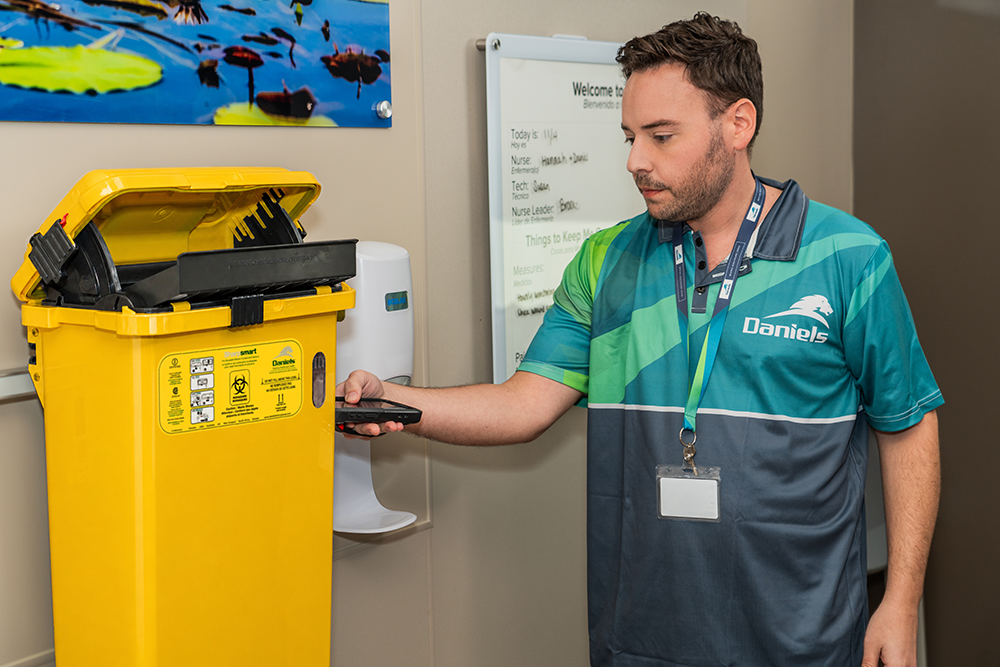
Improved waste segregation starts by keeping general solid waste out of regulated clinical streams. Through smarter segregation at the point of use, Daniels helps hospitals lower waste volumes, reduce container exchanges, and decrease treatment costs.
Combined with reusable, liner-free containers and data-driven optimizations, our approach delivers sustained reduction in both waste pounds and total cost of ownership.



Where Sustainability Delivers Results
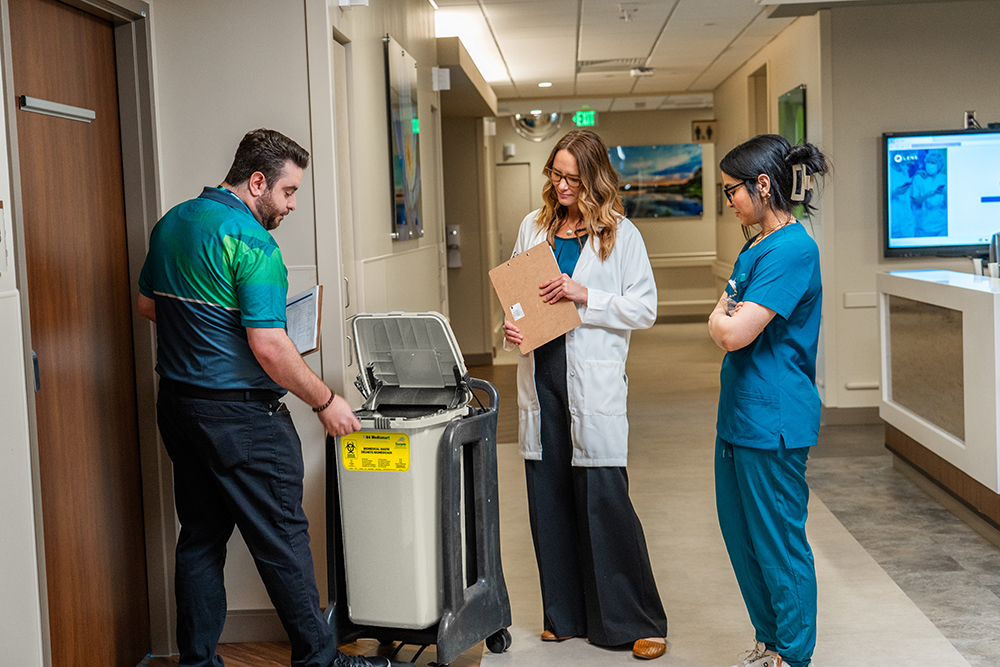
Hospitals need sustainability claims backed by proof. Daniels supports leading healthcare facilities with measurable waste and emissions improvements, supported by performance data, documented results, and long-term partnerships built inside the four walls.
-

Sharpsmart Reusables vs Single-Use Containing Recycled Polymer
The study compares the Global Warming Potential (GWP) of single-use sharps containers manufactured with 80% recycled polymer with Sharpsmart reusable sharps containers.
-

Sharpsmart: Impact on Life-Cycle Carbon Footprint
The article compares the global warming potential (GWP) of 40 acute NHS Trust hospitals converting from single-use plastic containers to reusable sharps containers.
-

Tonnes of Plastic Reduced with Reusable Sharps Containers
A study to investigate the volume of plastic that could be reduced through implementation of a reusable sharps container system.
-

Sharpsmart: 86% Carbon Emissions Reduction
This before/after intervention studies UK hospitals to attain information on the differences in CO2 emissions from reusable and disposable sharps systems.
-

Sharpsmart Sharps Containers: Reduce Greenhouse Gas Emissions
The 2 year study, ‘Impact on Carbon Footprint: An LCA of Disposable vs Reusable Sharps Containers in a large US Hospital’ was conducted in an 850 bed acute care facility to determine the reduction of GHG Emissions from the Sharpsmart collector.
-

Sharpsmart: 28% Waste Reduction
A five year study examining 103 Hospitals, revealed a 28% medical waste reduction with the introduction of the Daniels Sharpsmart system
Sustainability results hospitals can measure.
Daniels helps hospital leaders reduce environmental impact by improving waste stream performance, increasing diversion, and eliminating unnecessary single-use packaging through reusable container systems, all backed by transparent reporting.