Biomedical Waste in Canada: Types, Rules and Disposal
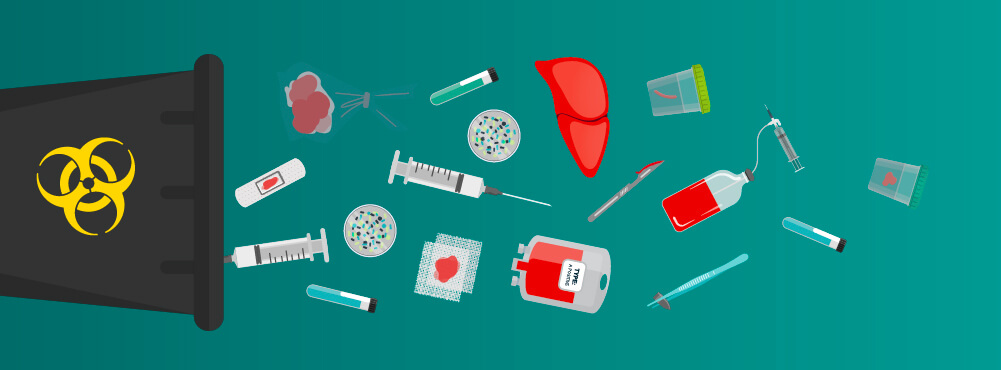
What is considered biomedical waste? Biomedical waste is waste produced during the diagnosis, treatment or immunisation of humans or animals, or in related research. In Canada, it generally includes human and animal anatomical waste, microbiology laboratory waste, human blood and body fluid waste, sharps waste, and cytotoxic waste.
Definitions and handling rules for biomedical waste are set by federal guidance and adjusted by each province and municipal government, so the exact list can change depending on where your facility operates. Because of this, a single facility can be subject to several layers of rules at once, and the local ones are often the strictest.
This guide covers what biomedical waste is, how the provinces define it, who regulates it, and how facilities handle and dispose of it safely.
Continue reading, or click below to learn: 1 / What Is Biomedical Waste?
2 / How Different Canadian Provinces Define Medical Waste
3 / Which Canadian Agencies Regulate Biomedical Waste
4 / What the Rules Say About Biomedical Waste Managment
5 / Handling and Storage of Biomedical Waste
6 / Disposal and Treatment of Biomedical Waste
7 / How Daniels Health Can Help
8 / Frequently Asked Questions About Biomedical Waste
What Is Biomedical Waste?
Biomedical waste is the regulated subset of healthcare waste that can carry infection or biological risk. That regulated stream is what biohazardous material becomes once it’s discarded. If you need the underlying definition, our guide covers what a biohazard is, what the biohazard symbol means, and how Canada classifies biological risk by Risk Group. This page covers how each province defines the waste stream itself. It is separate from the general waste a facility produces, such as packaging or paper, which is usually non-hazardous and handled as regular waste. In most cases, biomedical waste is treated as regulated, non-hazardous waste rather than hazardous waste in the chemical sense, but it still requires controlled segregation, storage, and treatment because of the infection risk it carries.
Most provincial definitions break biomedical waste into the same broad categories. The list below shows how those categories typically map to a disposal stream.
Anatomical waste:
- What it includes: Human and animal body parts, organs and tissue
- Typical disposal stream: Incineration
Non-anatomical waste:
- What it includes: Sharps, blood-soaked materials and equipment that has touched blood or fluids
- Typical disposal stream: Sharps and biomedical containers
Microbiology:
- What it includes: Cultures, specimens and live vaccines
- Typical disposal stream: Autoclave or incineration
Blood waste:
- What it includes: Human blood and body fluid waste
- Typical disposal stream: Biomedical containers
Cytotoxic waste:
- What it includes: Waste from chemotherapy and cancer drugs
- Typical disposal stream: Dedicated cytotoxic disposal
Chemical and pharmaceutical waste:
- What it includes: Separated out by some provinces
- Typical disposal stream: Specialty waste streams
How Different Canadian Provinces Define Biomedical Waste
Each province can define biomedical waste in its own way, and some choose not to define it at all. This is only a sample of how the provinces approach it, but it shows how much definitions can vary between areas. That’s why teams should be familiar with both the federal baseline and the rules specific to their own province or territory.
British Columbia
In British Columbia, biomedical waste is categorized into anatomical solid and liquid waste from humans and animals, microbiological waste such as waste serums and vaccines, non-anatomical waste such as contaminated equipment, waste sharps like used needles, and chemical and pharmaceutical waste.
Alberta
Alberta does not define biomedical waste separately and does not regulate it as hazardous waste, so generators in Alberta follow the federal guidelines instead.
Saskatchewan
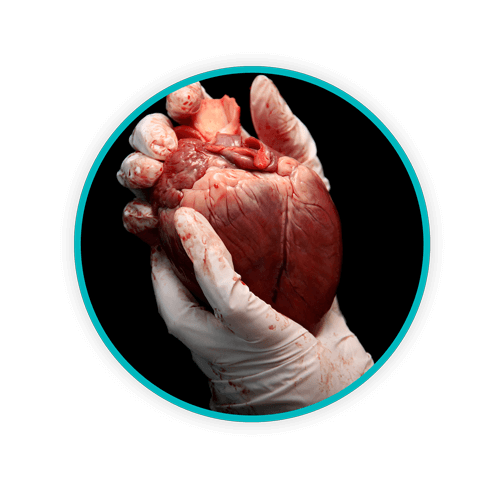
Saskatchewan defines biomedical waste as the part of medical waste that needs special precautions, including cytotoxic waste, infectious waste, sharps and waste that is especially sensitive because of its nature, such as human body parts.
Ontario
Ontario’s biomedical waste definition covers animal and human anatomical waste, animal and human blood waste, cytotoxic waste, microbiology laboratory waste, sharps waste, and any waste that has contacted or contains infectious human blood waste.
Québec
Québec sets its own biomedical waste definition that includes human and animal anatomical waste (with exclusions such as teeth, hair and blood), non-anatomical waste like contaminated sharps and breakable objects, biological tissue and cultures, live vaccines, and materials saturated with blood.
Which Canadian Agencies Regulate Biomedical Waste?

Several federal bodies shape how biomedical waste is managed across Canada. The Government of Canada publishes the “Canadian Biosafety Standard,” which facilities should review regularly. The Canadian Council of Ministers of the Environment and the Canadian Standards Association have also published guidance, including the “Guidelines for the Management of Biomedical Waste in Canada” and standards covering sharps injury protection and sharps containers.
You should always familiarize yourself with the guidelines for your province or territory. This is vital since it is possible that these standards could be stricter than the federal guidelines, and if that is the case, they will need to be followed as well.
What the Rules in Canada Say About Biomedical Waste Management
The Canadian Environmental Protection Act (CEPA) is the federal law that regulates several types of waste, including biomedical waste. CEPA frames its purpose around pollution prevention and sustainable development, and it provides the legal footing for a range of federal environmental and health protection programs.
The “Guidelines for the Management of Biomedical Waste in Canada” go into more detail on packaging, segregation and treatment options, and they apply across all provinces. They also set out requirements for transporting biomedical waste, which at the federal level is governed by the Transportation of Dangerous Goods Regulations.
Provincial bodies regulate alongside the federal framework. In the Northwest Territories, the Environmental Protection Service regulates hazardous waste, including biomedical waste. In Ontario, the Ministry of the Environment, Conservation and Parks oversees it. In every case, provincial guidelines apply in addition to the federal ones.
Handling and Storage of Biomedical Waste
Everyone in a healthcare facility who handles biomedical waste needs to know how to prepare it for disposal safely. That means identifying the type of waste, following the correct color-coding and labeling procedures, and meeting the transportation, disposal and local regulatory requirements that apply.
Storage has its own rules. Biomedical waste must be held in a secure, enclosed area that is separate from any food preparation space and is not accessible to unauthorized personnel, and the area must be marked with biohazard symbols. Federal guidance also sets temperature limits: biomedical waste is generally refrigerated at about 4°C, and held at a lower temperature if it is stored for more than four days. Time and temperature limits vary by province and territory, so confirm the rules with your provincial or territorial authority.
Disposal and Treatment of Biomedical Waste
Biomedical waste is treated to make it safe before final disposal, most often through autoclaving (steam sterilization) or incineration, depending on the waste type and the provincial rules. Anatomical and cytotoxic waste is typically incinerated, while many sharps and infectious wastes can be autoclaved.
Disposal rules vary by province as well. Saskatchewan, for example, recommends segregating biomedical waste into classes to make disposal more cost-effective, including:
- Animal Biomedical Wastes
- Cytotoxic Chemical Wastes
- Human Anatomical Wastes
- Human Blood and Body Fluids Wastes
- Microbiology Laboratory Wastes
- Sharps Wastes
- Special Precaution Wastes
Whatever province you operate in, review both the federal rules and your provincial or territorial rules to stay compliant.
Daniels Health Offers Solutions
Daniels Health provides educational resources and disposal systems that help Canadian medical teams stay compliant with local, provincial and federal rules. Partnering with a waste management specialist makes it easier to avoid fines, protect staff and handle biomedical waste correctly, rather than managing it alone. Daniels supplies dedicated containers and disposal streams for each waste category, including sharps disposal, cytotoxic disposal and anatomical disposal.
Call 888 952 5580 to talk to a Daniels specialist or request a free proposal below.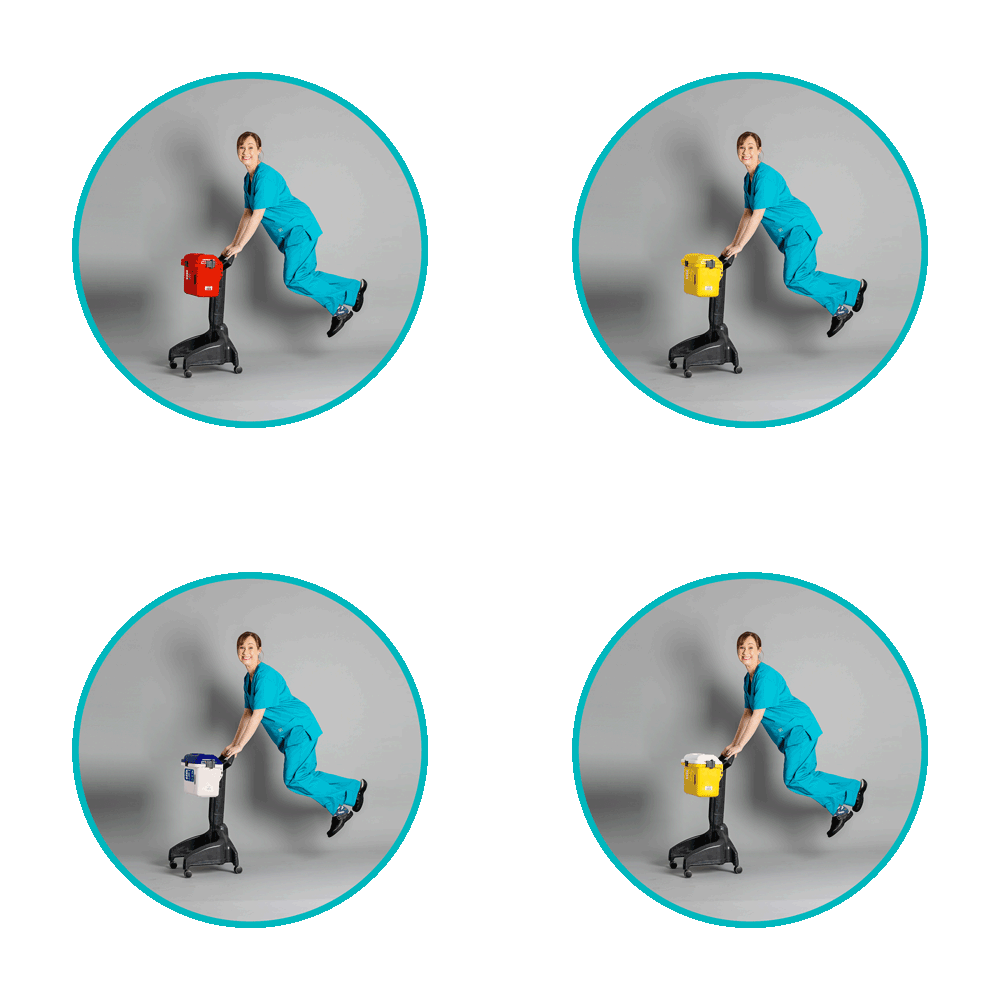
1 https://www.canada.ca/en/public-health/services/canadian-biosafety-standards-guidelines/handbook-second-edition/chapter-16-20.html

Taylor Maris
Frequently Asked Questions About Biomedical Waste in Canada
Let's Talk!
Your time is valuable, and we don’t want to play hard to get. You can either phone us directly on the details listed on our contact page, or feel free to fill out this short form and one of our team members will get back to you as quickly as possible.